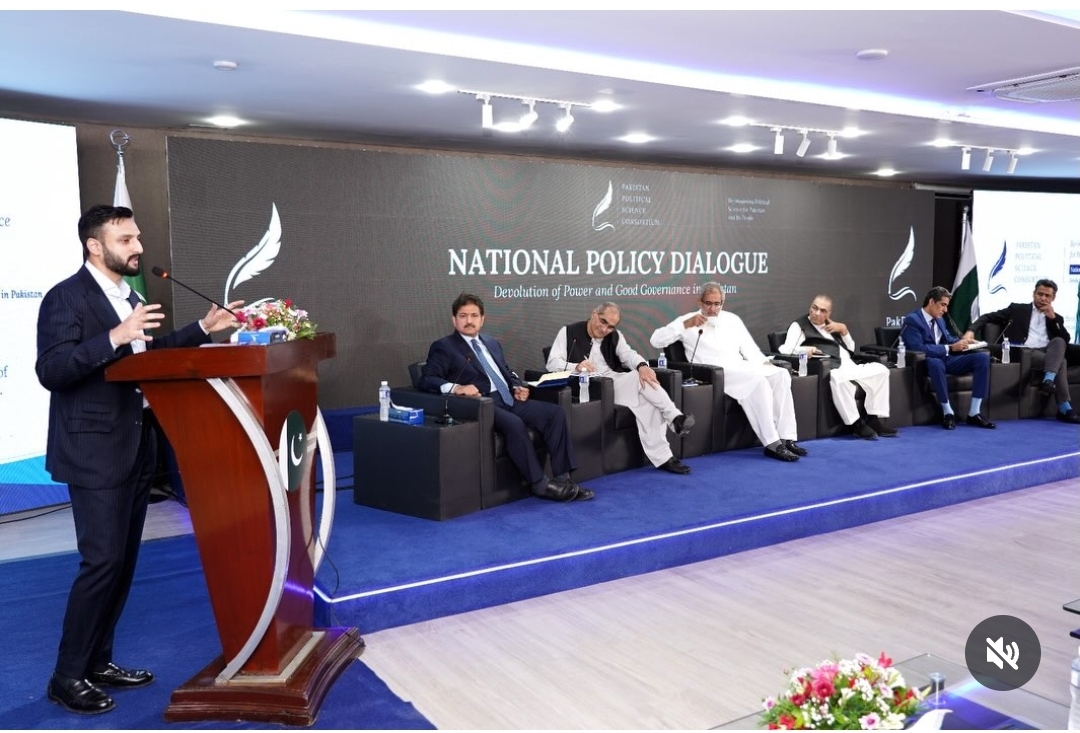
LAHORE, September 5, 2026: The Pakistan Political Science Consortium (PakPSC) convened a National Policy Dialogue on “Devolution of Power and Good Governance in Pakistan” at HS Hall, University of Management and Technology (UMT), bringing together political leaders, former ministers, senior journalists, legal experts and policymakers to debate one of the country’s most consequential governance questions: whether Pakistan needs new provinces, or simply needs its existing institutions to work as the Constitution intends.
The daylong dialogue, chaired across two panels, moved the conversation beyond the familiar political demand for new provinces into a wider examination of federalism, fiscal devolution, civil service reform and the unfinished business of the 18th Amendment. Federal Minister for Interior Syed Mohsin Raza Naqvi attended as chief guest and delivered the concluding address.
Opening the proceedings, UMT President Ibrahim Hassan Murad set a pointed tone, asking what Pakistan’s thousands of political science graduates and PhD scholars have actually produced for the country’s governance problems. Political science in Pakistan, he argued, needs to be rooted in the country’s own institutional history — from the 1950s through to the present — rather than imported Western frameworks. He urged participants toward evidence-based, non-partisan debate, and framed the day’s central question: which institutional arrangement — empowered local government, greater regional autonomy, or new provinces — best serves ordinary citizens.