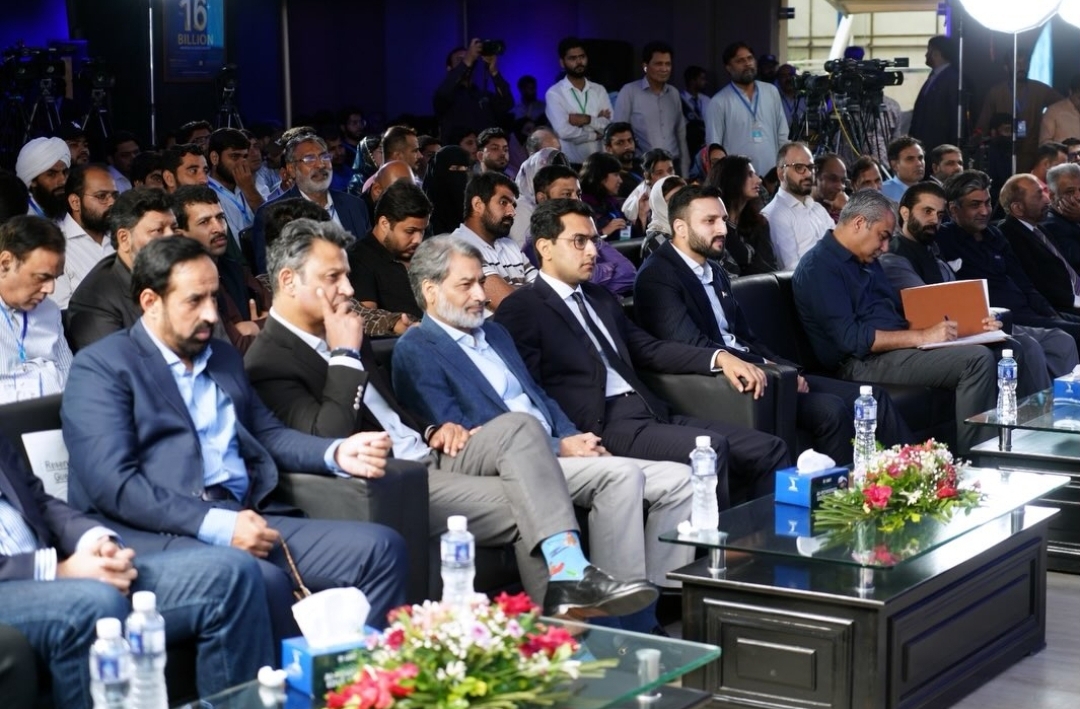
The second panel turned from constitutional theory to the mechanics of administrative and fiscal devolution, with contributions from Sheikh Muhammad Tanveer, Dr Khalid Maqbool Siddiqui, Punjab Assembly Speaker Malik Muhammad Ahmad Khan, Chaudhary Salik Hussain, Makhdoom Syed Ahmad Mahmood, Muhammad Ahsan Bhoon, Khalid Khokhar and Hamid Mir.
Speaker Malik Muhammad Ahmad Khan opened by calling for civil service reform that places authority more clearly with elected representatives, and for clarity on the overlapping responsibilities of federal, provincial and local governments.
Makhdoom Syed Ahmad Mahmood, President of PPP Southern Punjab and a former Governor of Punjab, offered what became one of the day’s more quoted formulations: “Good governance is actually good politics.” He identified visionary leadership, and the absence of nepotism and corruption, as the three preconditions for reform, and argued that fiscal devolution cannot stop at the provincial level — the Provincial Finance Commission must move resources down to districts and communities, just as the NFC moves them from the federation to the provinces.
Federal Minister Chaudhary Salik Hussain suggested one practical route forward: converting existing administrative divisions into provinces, reducing the concentration of authority in large provincial capitals without requiring a wholesale constitutional overhaul.
Speaking for the agricultural sector, Pakistan Kissan Ittehad President Khalid Khokhar said farmers receive a fraction of their promised budgetary allocation — about 12.77 percent against a promised 65 percent — and pointed to the politicisation of wheat pricing and subsidised “sasti roti” schemes as evidence of governance failing at the grassroots.
Returning to the podium, Hamid Mir argued that up to four additional provinces could in principle be carved from the four existing ones, bringing the total to eight, and asked why Pakistan could not produce mayoral leadership of the kind seen internationally if local government were genuinely empowered.
Dr Khalid Maqbool Siddiqui, MQM-P convener, described Pakistan’s system as a “feudal democracy” (“jagirdarana jamhooriyat”) and argued that the country’s core deficit is one of intention and trust as much as finance — a “trust deficit” alongside a fiscal one.
Former Supreme Court Bar Association president Muhammad Ahsan Bhoon grounded the debate in Article 1 and Article 239(4) of the Constitution, insisting that any change to provincial boundaries must proceed through cross-party dialogue, not unilateral action.